Share to:
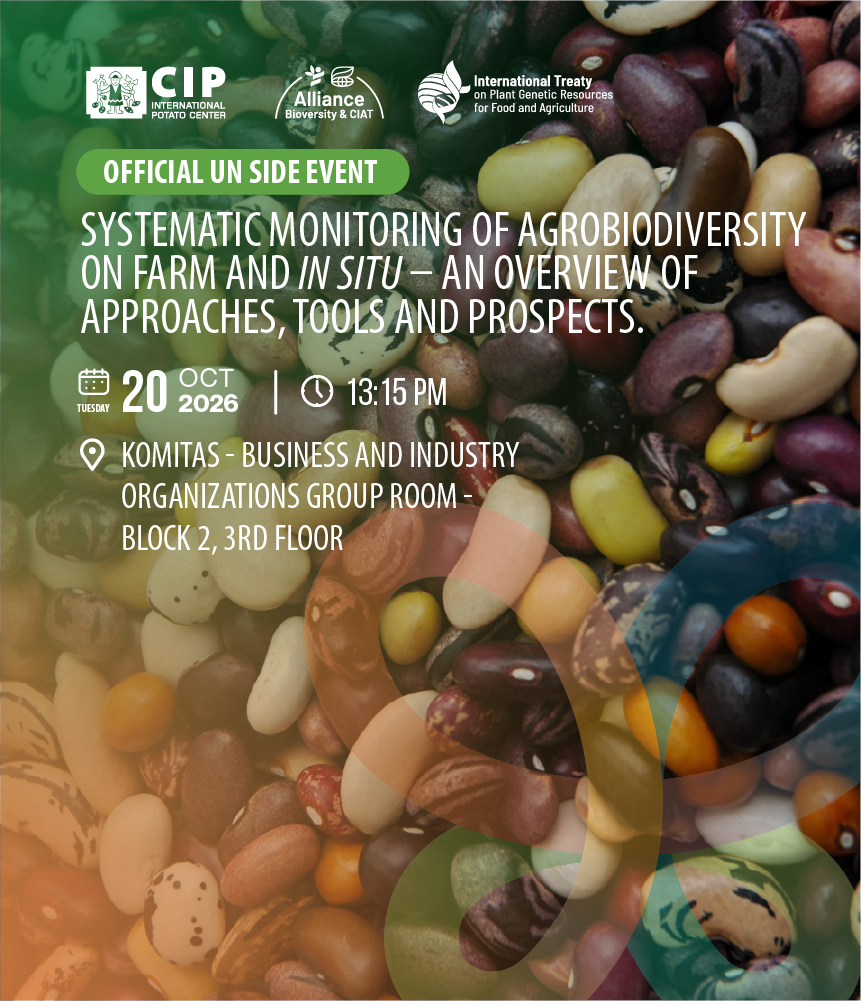
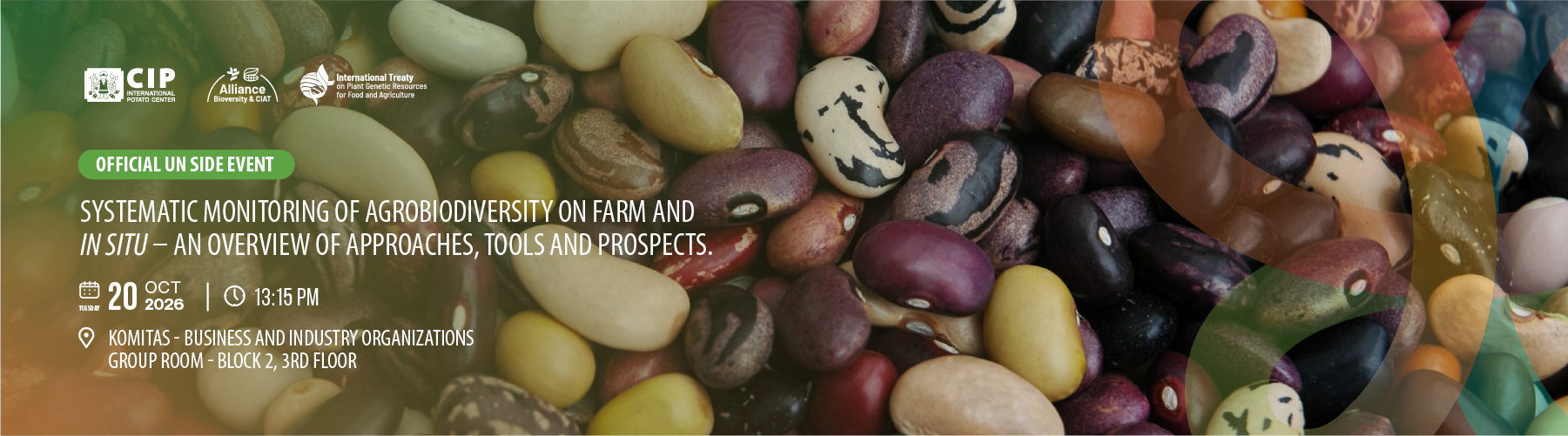
Systematic monitoring of agrobiodiversity on farm and in situ – an overview of approaches, tools and prospects
Agricultural biodiversity is essential for resilient food systems, yet monitoring the diversity of crops, varieties and locally adapted populations remains a global challenge.
At COP17, the International Potato Center (CIP) and partners will bring together initiatives working on agrobiodiversity monitoring to share approaches, tools and lessons learned, and explore opportunities to harmonize methods and strengthen collaboration.
The discussion will focus on how comparable data can help fill gaps in global biodiversity monitoring and support the implementation of the Kunming-Montreal Global Biodiversity Framework, including Target 4.

STEF DE HAAN
Agri-Food Systems Senior Scientist, CIP
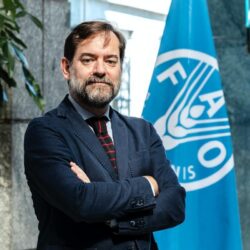
ALVARO TOLEDO
Secretariat of the International Treaty on Plant Genetic Resources, FAO
TOBIAS KIENE
Secretariat of the International Treaty on Plant Genetic Resources, FAO
KYLE MALASZUK
Secretariat of the International Treaty on Plant Genetic Resources, FAO
COLIN KHOURY
Global Conservation Lead, Crop Trust
ERICK BISHOP VON WETTBERG
Professor, University of Vermont

ISABEL LÓPEZ NORIEGA
Legal Specialist, Alliance of Bioversity and CIAT

TIFFANY STRAZA
Programme Officer, Biodiversity Policy, UNEP WCMC
NATASHA ALI
Head of Policy Support, UNEP WCMC
Introduction
The monitoring framework for the KM-GBF: How do domesticated species fit?
Experiences
Approaches, experiences, tool boxes and decision support platforms for monitoring agrobiodiversity on farm
- Presentation by Stef de Haan (CIP): Systematic monitoring of crop landrace diversity in the Andes: experiences and best-practices
- Presentation by Carlo Fadda, Alliance of Bioversity and CIAT: Who to involve when doing monitoring on farm – experiences engaging community seedbanks in agrobiodiversity monitoring
- Presentation by Margarita Manvelyan, WWF-Armenia: Diversity Assessment Tool for Agrobiodiversity and Resilience (DATAR) and its use in Armenia
- Presentation by Ali Sahri, INRA Morocco (online): Studying, documenting and collecting landraces in Morocco.
- Presentation by Gulchehra Karakhodjaeva, Institute of horticulture, viticulture and enology, Tashkent, Uzbekistan (online): Assessing and tracking the diversity of fruit trees and horticultural species in their center of origin.
Brief reflections by experts and discussions with participants
- Raquibul Amin, Science and Strategy Group at the IUCN Asia Regional Office
- Natasha Ali, UN Environment Programme World Conservation Monitoring Centre – UNEP-WCMC
- David Castro, Ministry of Environment, Peru
- Bob-Jan Kreiken, Centre for Genetic Resources, Wageningen University and Research
- Colin Khoury, Crop Trust
- Tobias Kiene/Kyle Malaszuk, ITPGRFA Secretariat and FAO
Conclusion