
Access to high-quality seeds is critical for successful crop production as it directly influences agricultural productivity, food and nutritional security, and farm incomes. Superior seeds contribute to pest and disease resistance, adaptability to climate variability, and timely planting, particularly at the onset of the first rains. They ensure the genetic and physiological integrity of crops, reducing the reliance on unreliable seed sources and enhancing resilience in farming systems.
In northern Ghana, sweetpotato farm households face significant challenges, particularly limited access to quality planting materials and water scarcity during the extended dry season, which lasts between four to six months. Farmers primarily rely on vine cuttings from volunteer plants that sprout from residual roots of the previous season or on gifts from neighboring farmers. However, these sources are inherently insecure and unsustainable, posing risks to food and nutritional security. For instance, delayed rains may prevent the sprouting of volunteer roots, resulting in insufficient vine cuttings for cultivation. Additionally, such planting materials are often infected with pests and diseases carried over from previous cropping cycles, exacerbating productivity losses.
The erratic and unpredictable rainfall patterns driven by climate change underscore the need for innovative, climate-smart agricultural (CSA) practices to mitigate these challenges. One such innovation is the Triple S (Sand Storage and Sprouting) technique, which offers an effective solution for sweetpotato seed conservation. This method enables farmers to store sweetpotato roots in dry, coarse sand during the long dry season, ensuring a reliable source of healthy vine cuttings for timely planting and harvesting throughout the growing season. This approach significantly enhances yields, food availability, and farm income.
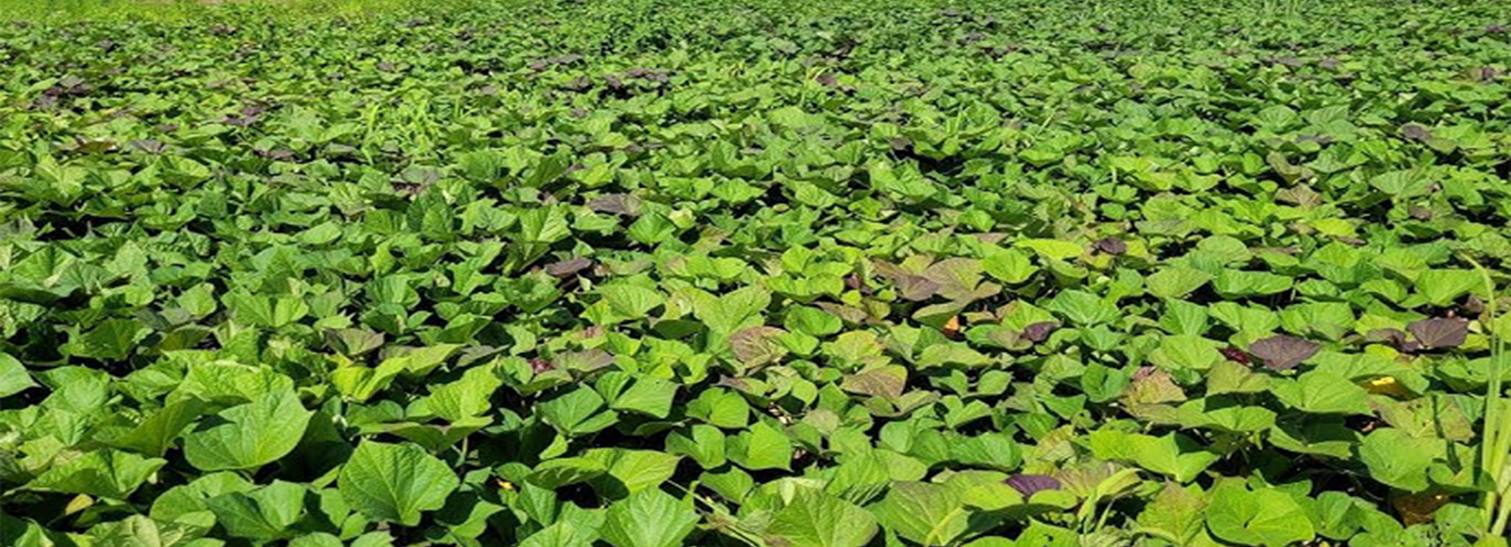
To address these issues, the Social Diffusion of Sweetpotato Seed Storage Techniques (SDSSST) project, in collaboration with the Generating Revenues and Opportunities for Women to Improve Nutrition in Ghana (GROWING) project—co-implemented by the International Potato Center (CIP), Ghana, and CARE International—has introduced farmers to the Triple S technology. The initiative focuses on building the capacity of farmers to conserve planting materials by adopting the following steps:
- Identifying and tagging healthy orange-fleshed sweetpotato (OFSP) crops in the field.
- Harvesting and storing the roots in clean, dry, coarse sand to preserve them during the dry season.
- Planting these stored roots in well-fenced backyard gardens to sprout new, healthy vines.
Farmers can then multiply these vines for large-scale planting in their fields, ensuring a sustainable and secure supply of high-quality planting materials. By integrating the Triple S technique into CSA practices, the project aims to empower sweetpotato farmers in northern Ghana, enhancing their resilience to climate shocks, improving productivity, and securing food and nutritional outcomes for their households.
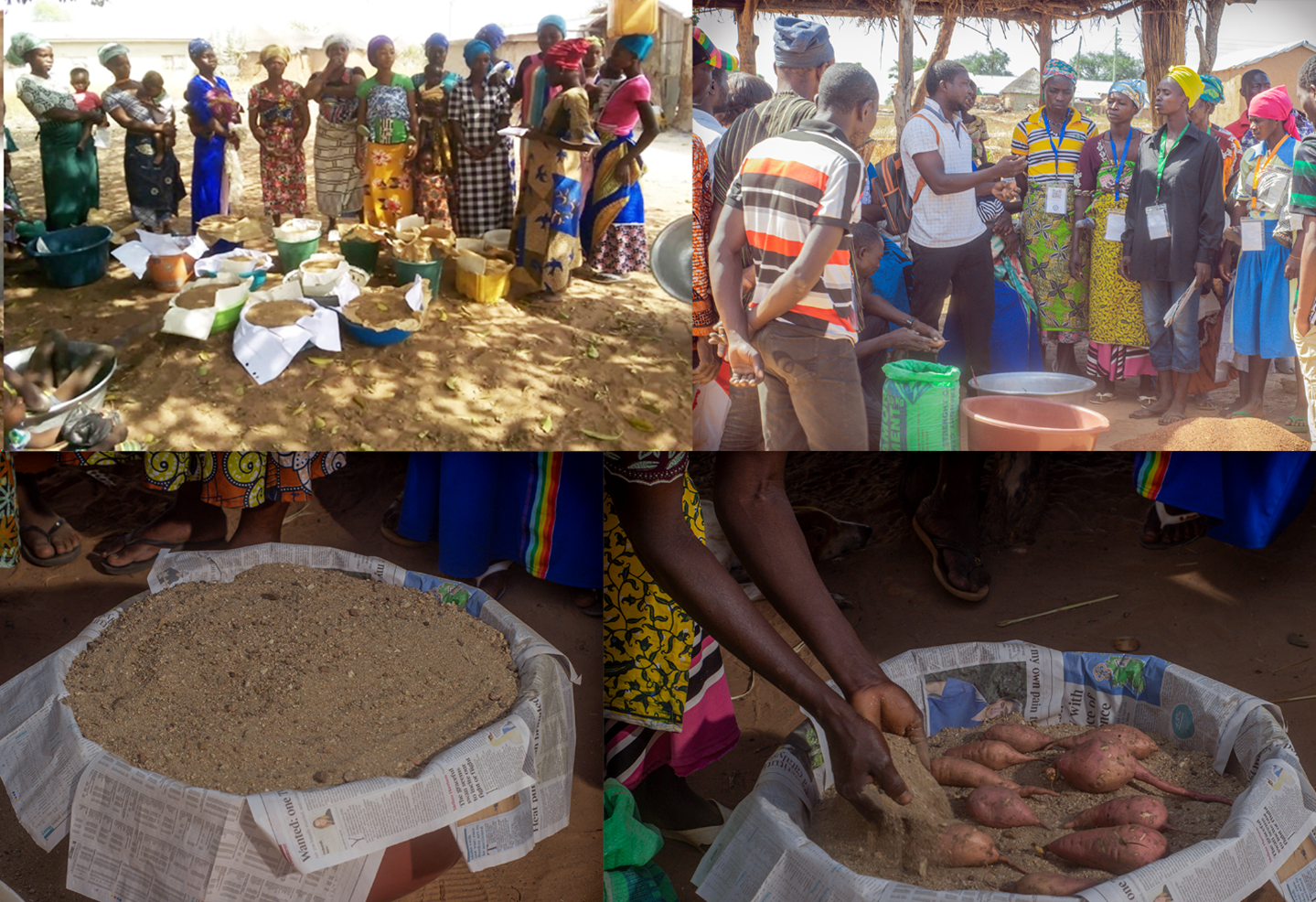
The implementation of the Triple S (Sand Storage and Sprouting) technology has proven to be a transformative, knowledge-intensive intervention for improving sweetpotato farming among GROWING GFC households. This approach combines coaching, mentoring, regular monitoring, and follow-ups to ensure farmers can effectively establish and maintain their Triple S containers. These containers, loaded with orange-fleshed sweetpotato (OFSP) roots, serve as a critical resource for healthy planting material. Over a period of four to five months, farmers are guided through routine inspections to remove rotten or weevil-infested roots and monitor sprouting progress. Once the roots have sprouted, they are transplanted into root beds within properly fenced backyard gardens. These gardens are irrigated consistently for two to three weeks, ensuring optimal vine development and preparing farmers for the planting season.
For many farmers, the results of adopting this technology have been profound. One such example is Raymond Wassah, a model farmer from the Saboba district, who stored 63 medium-sized OFSP roots using the Triple S technique. After four months of storage, he planted the sprouted roots in a fenced garden near a stream, enabling him to irrigate the garden easily. This strategic approach resulted in the production of 2,568 healthy vine cuttings, which Raymond successfully transplanted into his main OFSP field, spanning half an acre and containing 856 mounds. Similarly, Mr. Aliu Tia, a model farmer from Kpikpaborigu in the East Mamprusi district, used 13 medium-sized OFSP roots stored in his Triple S container to establish a backyard garden. Through consistent irrigation and careful management, Mr. Tia multiplied 3,856 vines, which he then planted across 964 mounds in his sweetpotato field.
Beyond meeting their own planting material needs, some farmers have leveraged the surplus vines to generate additional income, creating new economic opportunities within their communities. For instance, a model farmer in Bowku, located in the East Mamprusi district, earned GHS 500 by selling vine cuttings to other local farmers. This entrepreneurial use of surplus vines highlights the broader economic potential of the Triple S technology. In another compelling example, a model farmer from Naware in the same district stored 52 OFSP roots and, through the Triple S technique, multiplied approximately 7,000 healthy vines. Of these, 2,000 vines were used to plant his own sweetpotato field, while the remaining 5,000 were distributed to other farmers within his community and neighboring areas, further strengthening regional sweetpotato production.
The introduction of the Triple S technology has not only addressed the challenge of seed insecurity but also enhanced farmers’ resilience to climate variability and improved their economic prospects. By ensuring a sustainable and reliable source of healthy planting materials, the technology has enabled timely planting, increased yields, and bolstered food security. Moreover, the ability to generate income from vine sales has empowered farmers economically, creating a ripple effect of benefits that extend beyond individual households to entire communities. Through initiatives like this, sweetpotato farmers are better equipped to adapt to challenges, secure their livelihoods, and contribute to a resilient agricultural ecosystem.

Despite the successes of the Triple S seed conservation and multiplication techniques across GROWING intervention communities, several challenges have emerged. Farmers have reported difficulties in acquiring quality coarse sand and essential materials like plastic basins required for the technique. Additionally, extreme temperatures, averaging 42°C during the dry season, have accelerated root deterioration, adding to the burden of managing storage. Water scarcity for irrigating planted OFSP roots and delays in the onset of rains have further complicated the process, affecting the timely transfer of vine cuttings to sweetpotato fields.
Nevertheless, the Triple S technique has proven to be the most reliable method for conserving healthy OFSP planting materials. Farmers have reported significant increases in the quantity of vine cuttings obtained through their own storage compared to what they received in previous seasons, reflecting improved self-sufficiency and resilience. The anticipated harvests highlight the transformative impact of the Triple S technique. By enabling farmers to secure planting materials and maintain productivity under adverse conditions, the approach is fostering sustainable farming practices and strengthening food security within communities. These advancements demonstrate the potential of innovative agricultural interventions to empower farmers and build resilient agricultural ecosystems.