In the Andean highlands, it’s common to see smoke rising from the fields after harvest. Farmers often burn leftover straw and crop residues to clear their land, unaware that this practice depletes soils, pollutes the air, and even risks uncontrolled fires.
But on a hillside in La Libertad, Peru, the picture is starting to look different. Here, farmers are beginning to replace burning with a golden blanket of straw over their potato fields. This simple act, mulching, shows promising potential to transform agriculture in the Andes.
Protecting the soil, protecting the harvest
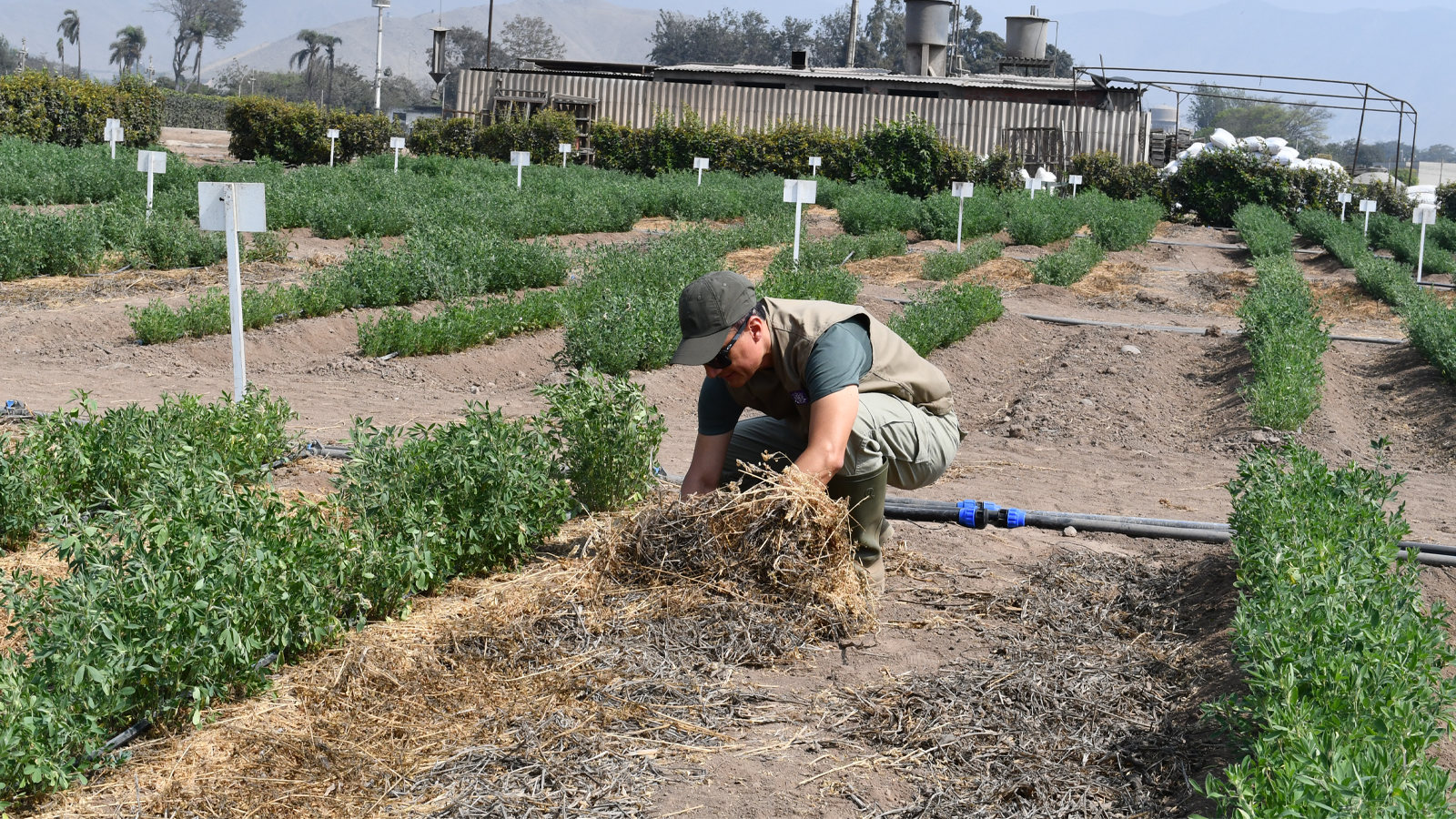
Mulching means covering the soil with plant by product, such as cereal or legume straw. It keeps the soil moist, suppresses weeds, and gradually replenishes organic matter in the earth. For potato farmers, that translates into less labor, healthier crops, and higher yields. In La Libertad, for instance, farmers have even used pine needles as mulch with remarkable results, an approach that not only benefits potato fields but also opens opportunities to intensify pine forests within agroforestry systems.
In demonstration plots in Chugay, farmers who used mulching harvested nearly 40 tons of potatoes per hectare, double the regional average. Some even reached an impressive 80 tons.
A global idea, transplanted
The idea isn’t entirely new. In India, CIP first tested potato with rice straw mulch since 2019. Results showed higher yields, lower costs, and fewer greenhouse gas emissions compared to conventional farming. Building on that success, CIP scientists brought the approach to Peru.
What makes it special is how it connects with ancestral wisdom. For centuries, Andean farmers have practiced chacmeo and chiwa, a low-tillage techniques that conserves soil structure and moisture. Mulching, backed by science, echoes this same principle: work with the soil, not against it.
More than just yields
Mulching is about more than productivity. By recycling crop waste instead of burning it, farmers reduce emissions and fire risks. By keeping the soil cool and moist, they build resilience against droughts and erratic rains. By lowering the need for weeding and costly inputs, they save both time and money.
At CIP’s Lima campus, situated in a desert environment, mulching has also proven effective. Combined with minimum tillage, it restored fertility to degraded soils and boosted yields of Poderosa Crocante, a variety bred for French fries and known for its tolerance to late blight. These results demonstrate that regenerative practices can be successful even in the most challenging conditions.

A practice with global promise
What started in Asia and is now flourishing in Peru holds promise far beyond. Mulching can be adapted to many crops and regions, offering a practical way to reduce agriculture’s carbon footprint while feeding more people sustainably.
For the smallholder farmers of the Andes, mulching means turning what was once burned into a resource that nourishes both the soil and their livelihoods. For the world, it is a reminder that sometimes the most powerful innovations begin with the simplest act—laying straw on the ground instead of setting it alight.