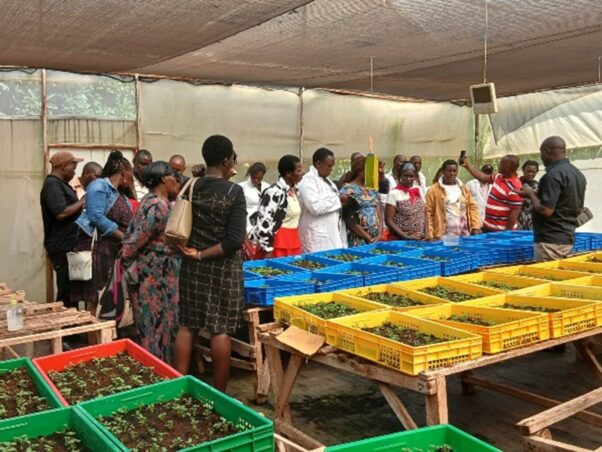
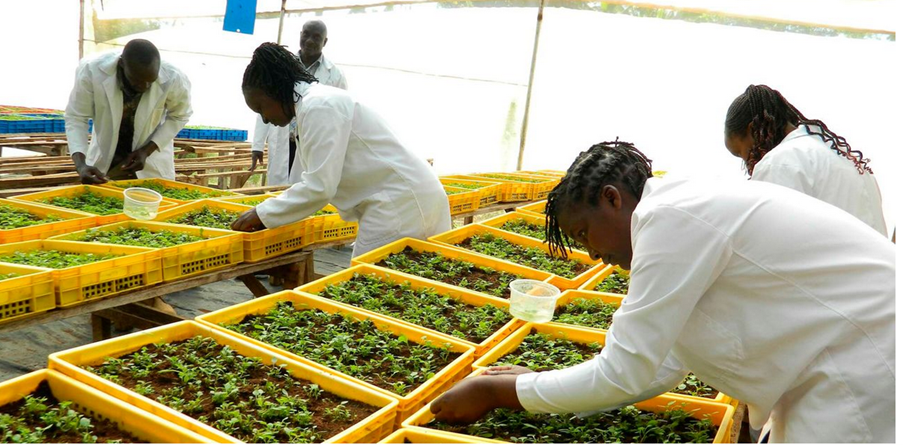
With an annual capacity of 5 million apical-rooted cuttings and the ability to produce up to 5,000 cuttings per day, the Rukaria nursery can plant approximately 12,500–16,500 hectares of potato per year, assuming standard planting densities of 30,000–40,000 plants per hectare. This scale is transformational, providing enough seed to influence a significant share of Kenya’s commercial and semi-commercial potato area, sharply reduce dependence on recycled seed, and accelerate varietal turnover.
At the heart of Kenya’s Central Highlands Ecoregion Foodscape (CHEF), Rukaria Farm has grown beyond a conventional nursery to become a dynamic regional innovation and learning hub. Founded with support from the International Potato Center (CIP), FIPS and key partners, and later strengthened through the Sustainable Farming Program under CGIAR, the hub integrates research, climate-smart agronomy, and participatory approaches. Working closely with more than 20 registered farmer groups and adopting a farmer-group umbrella model, Rukaria Farm enables inclusive access for women and youth, accelerates the testing and scaling of improved potato varieties, and provides hands-on learning opportunities for county governments, academic institutions, and other stakeholders across Central Kenya and beyond.
Anchoring Climate-Smart Potato Systems in the CHEF Region
Within the CHEF landscape, where water scarcity, rising temperatures, and disease pressure increasingly constrain productivity, Rukaria Farm functions as a climate-smart entry point for potato intensification. The hub integrates high-quality planting material with demonstrations on efficient water use, soil health, and adaptive variety choice, directly responding to the region’s role as both a food basket and a national water tower.
During a recent field day, farmers moved plot to plot, comparing varieties under real field conditions. “We have seen Wanjiku perform consistently even when late blight pressure is high,” noted one farmer. “It gives us confidence to invest.”
A Launchpad for New Varieties and Research Partnerships
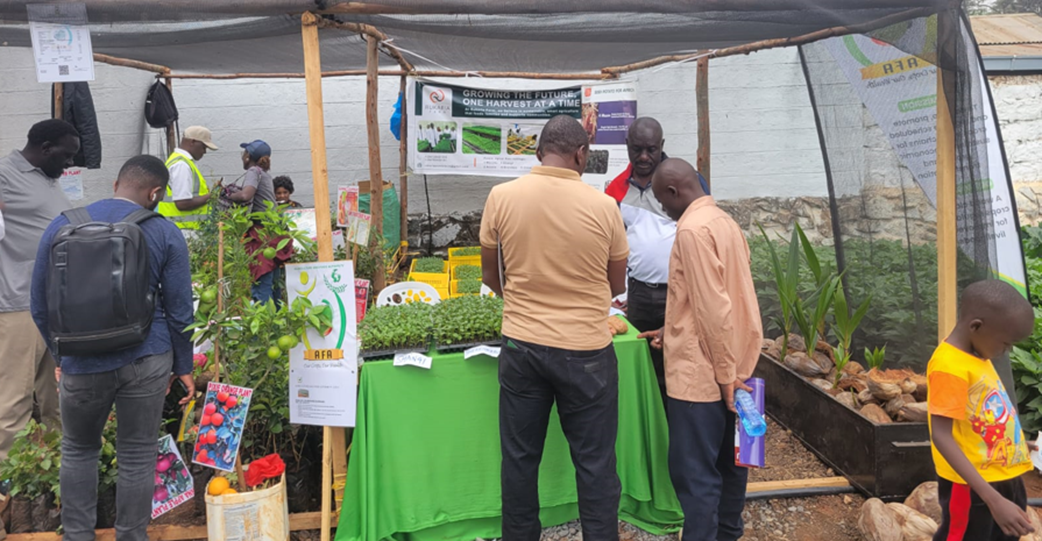
Rukaria Farm is also a variety initiation and validation platform. Partner organizations use the hub to introduce and test new materials under farmer-managed conditions. “We are currently working with IITA on Malaika Potato Variety,” explains Paul, the Rukaria Farm Manager. “This variety has shown tolerance to potato cyst nematode, which is a growing concern. Wanjiku and Sherekea varieties have become particularly visible through the hub’s demonstrations. Farmers in Meru repeatedly point to Sherekea’s red skin stability under hot conditions, including environments like Isiolo. “Even when temperatures rise, Sherekea keeps its skin color,” one Meru farmer explained. “That makes potato possible in places we never imagined before.”
“Unica, meanwhile, is increasingly valued for its heat tolerance, which moderates crop water demand and enables potato production to expand into mid-altitude zones, with emerging potential for adaptation in warmer lowland environments,” said one County staff member. This trait has opened pathways for potato adoption in warmer zones, expanding the crop beyond its traditional highland niche.
This hub allows farmers, researchers, and counties to see performance before scaling. Through this role, Rukaria bridges research, policy, and practice, serving county governments, academic institutions, and national programs. Hundreds of students, extension staff, and researchers pass through the farm annually, gaining hands-on exposure to modern seed systems and adaptive agronomy.
A Living Hub for Farmers, Women, and Youth
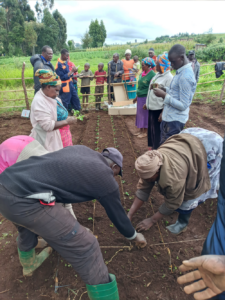
Beyond seed, the farm supports more than 20 registered farmer groups across Central Kenya and beyond, including West Pokot. These groups use the hub for training, demonstrations, and peer learning.
Importantly, participation is not abstract. Women and youth are visible actors. “Before, we mostly followed instructions,” says Njeri, a member of one of the farmer groups. “Here, we learn, we ask questions, and we make decisions. Even young people see farming as something modern and profitable.”
By functioning as a shared learning space rather than a top-down delivery point, Rukaria helps shift women and youth from passive recipients to informed decision-makers.
Water, Sustainability, and Systems Thinking
Rukaria’s demonstrations explicitly link seed quality with water productivity. Farmers observe how improved varieties, combined with better scheduling and soil cover, translate into more output per unit of water. In a landscape under growing hydrological stress, this connection is critical. The hub thus supports CHEF’s broader objective of aligning agronomic innovation with sustainable water use and landscape stewardship.
From a Farm to a National Asset
What emerges from Rukaria is not just seed multiplication, but system transformation. The nursery’s scale, its role in climate-smart varietal promotion, its integration of gender and youth, and its partnerships across counties and research institutions position it as a national public good embedded within the CHEF foodscape.
As one farmer summarized during a field day, “This place shows us the future of potato farming.” That future is rooted in quality seed, informed choice, inclusive participation, and sustainable use of land and water, exactly the transformation Kenya’s agricultural systems now require.