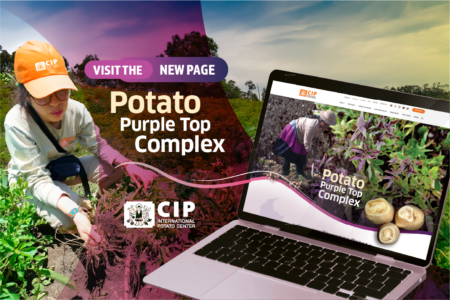
 On Tuesday, October 6, the International Potato Center (CIP) launched the new Purple Top Complex website built to strengthen the detection, monitoring, and management of one of the most alarming threats to potato production in the Andean region – Potato Purple Top.
“Purple top” refers to a complex of pests and diseases that is spread by small insects known as psyllids, which carry pathogens from one plant to another. The disease complex transcends borders, causing a potato abnormality known as zebra chip and significantly reduces crop yields
In a widespread outbreak, annual losses in Peru could reach up to US$109 million and affect nearly 125,000 hectares of potato production. Under epidemic conditions, crop loss can reach 100%, threatening the entire potato sector and the broader Andean food system, which depends on potatoes as a staple food. Furthermore, because the purple top complex affects not only potatoes but also other key export crops, including tomatoes and chili peppers, the economic consequences could be severe.
Current projections indicate that Peru is on high alert, a situation that could worsen with the warm temperatures associated with the Coastal El Niño phenomenon, which favor psyllid population growth. Now more than ever, detecting and managing this threat is essential to prevent an agricultural crisis.
The new website brings together scientific information and digital tools designed to raise awareness about the Purple Top Complex and help users understand its main elements: the insect vector, phytoplasmas, and zebra chip disease, along with their associated symptoms. The website importantly features a risk map that illustrates the potential spread of the purple top complex in South America and helps identify the most vulnerable areas.
This early prediction and identification tool could help Peru avoid the crisis Ecuador experienced in 2018, which led to crop losses of up to 100% in some areas. The information provided by the new website empowers agricultural workers, in collaboration with the National Agrarian Health Service of Peru (SENASA), to take action such as requesting training on disease identification and management, determining the most appropriate planting periods when psyllid populations are low, and selecting suitable seed sources to reduce the risk of infection. Improved prediction and management of insect populations could also reduce reliance on pesticides, which compromise biodiversity and farmers’ health.
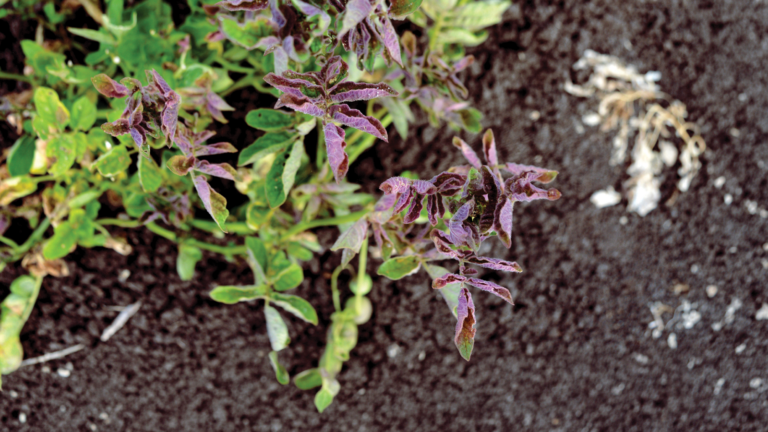
CIP is also developing new technologies to help farmers understand how to manage the disease complex if, or when, it arrives. According to researcher Heidy Gamarra, a specialized team at CIP is developing an artificial intelligence-powered application that will enable farmers to identify the insect that transmits purple top, recognize the symptoms, and access information on how to manage it. The application will be connected to automated traps that monitor insect populations, feeding data into an early detection and warning system.
These initiatives to combat purple top are part of CIP’s commitment to safeguarding potato production and food security in the Andean region through educational and technical support for pest and disease management. The Purple Top website is the first step, representing a commitment to regional cooperation grounded in scientific innovation to prevent widespread crop loss.