
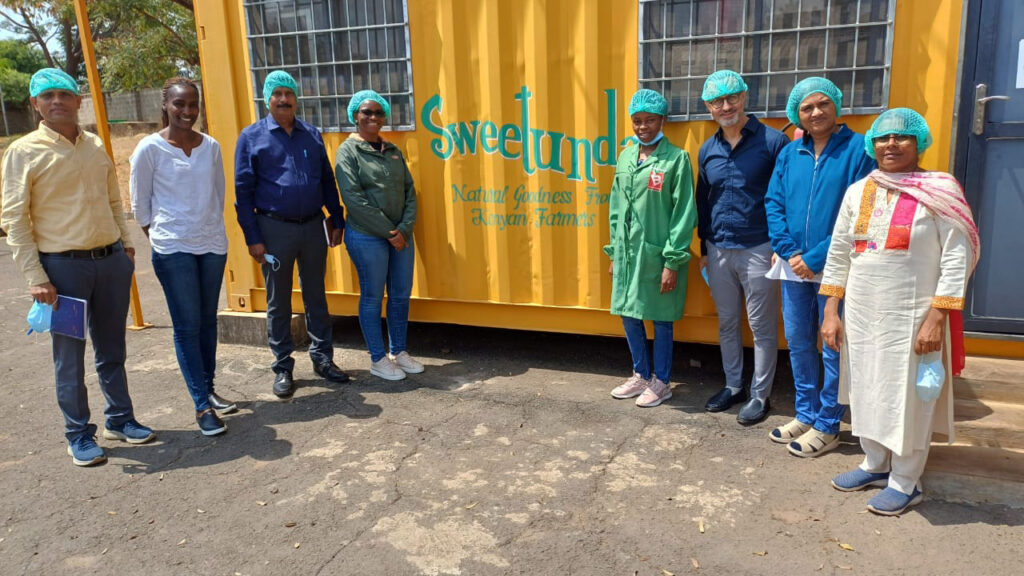
The International Potato Center (CIP) recently embarked on an interactive learning exchange on sweetpotato and potato value chains with a high-level delegation from the Government of Tamil Nadu, under the Tamil Nadu Irrigated Agriculture Modernization project (TNIAMP) team, India. The delegation included experts from the Tamil Nadu Agricultural University (TNAU), the World Bank Group, and the Central Tuber Crops Research Institute (CTCRI), who explored innovative approaches on seed systems, regenerative agriculture, digital breeding, climate-smart innovations, and value chain development for root and tuber crops.
CIP recently launched the CIP South Asia Regional Centre (CSARC) in Singna, Agra, Uttar Pradesh, marking 50 years of partnership and research in India. CSARC serves as a cutting-edge hub for potato, sweetpotato, and other root and tuber crop research and development, working closely with ICAR institutes, state agricultural departments, Indian universities, and private sector partners.
The timely visit by the Tamil Nadu team featured technical discussions, practical demonstrations, and joint solution-mapping sessions that enabled both teams to explore how African-led innovations in climate-resilient potato and sweetpotato technologies could be adapted to Tamil Nadu’s agricultural and market realities. In turn, the Tamil Nadu delegation shared valuable lessons from India’s root and tuber crop value chains, offering scalable approaches with potential to strengthen African systems. This dynamic exchange underscored the importance of co-developing locally tailored solutions rather than simply transferring technologies.
Meetings with CIP scientists, alongside partners from the Kenya Agricultural and Livestock Research Organization (KALRO) and the International Institute of Tropical Agriculture (IITA), gave the delegation firsthand exposure to innovations in climate-smart agriculture, seed systems, and value chain strengthening. Field visits showcased advanced sweetpotato breeding technologies and the integration of digital tools with traditional expertise to accelerate genetic improvement.
The program also included courtesy visits to the Director General of the International Livestock Research Institute (ILRI), Prof. Appolinaire Djikeng, and Mr. Robert Musyoki, Director of KALRO Seeds, at the organization’s National Seed Head Office in Thika. These engagements strengthened collaborative networks across research institutions, laying the groundwork for future partnerships aimed at building resilient, climate-smart, and nutrition-sensitive agricultural systems.
A reflection meeting led by Dr. Simon Heck, Director General of CIP, brought the Tamil Nadu delegation together with CIP leadership to identify concrete pathways for collaboration. Both teams reaffirmed their shared commitment to advancing science-based, climate-smart, and nutrition-sensitive solutions that can be adapted to diverse African and Indian contexts.
The Tamil Nadu delegation comprised Dr. S. Pazhanivelan, Director (Centre for GIS and Water Security), TNAU, Coimbatore; Dr. S. Kanaka, Agricultural Economist, TNIAMP, MDPU, Chennai; Dr. J. Suresh Kumar, Scientist-C, ICAR-Central Tuber Crops Research Institute, Trivandrum; Dr. C. Thangamani, Assistant Professor (Horticulture), TNAU, Coimbatore; and Dr. Farbod Youssefi, Senior Agribusiness Specialist, World Bank Group.
CIP leadership present included Dr. Joyce Maru, Regional Director for Africa; Thiago Mendes, Senior Plant Breeder; Mukani Moyo, Head of Urban Systems; Marcel Gatto, Agricultural Economist; Sammy Agili, Agronomist; Dorcas Amunga, Nutritionist, Rosemary Gatimu, Research Assistant in plant Tissue culture, and Martha Awinoh, Senior Communication Specialist, among others.
Here’s a quick glimpse into the visit:
Welcome to CIP Africa

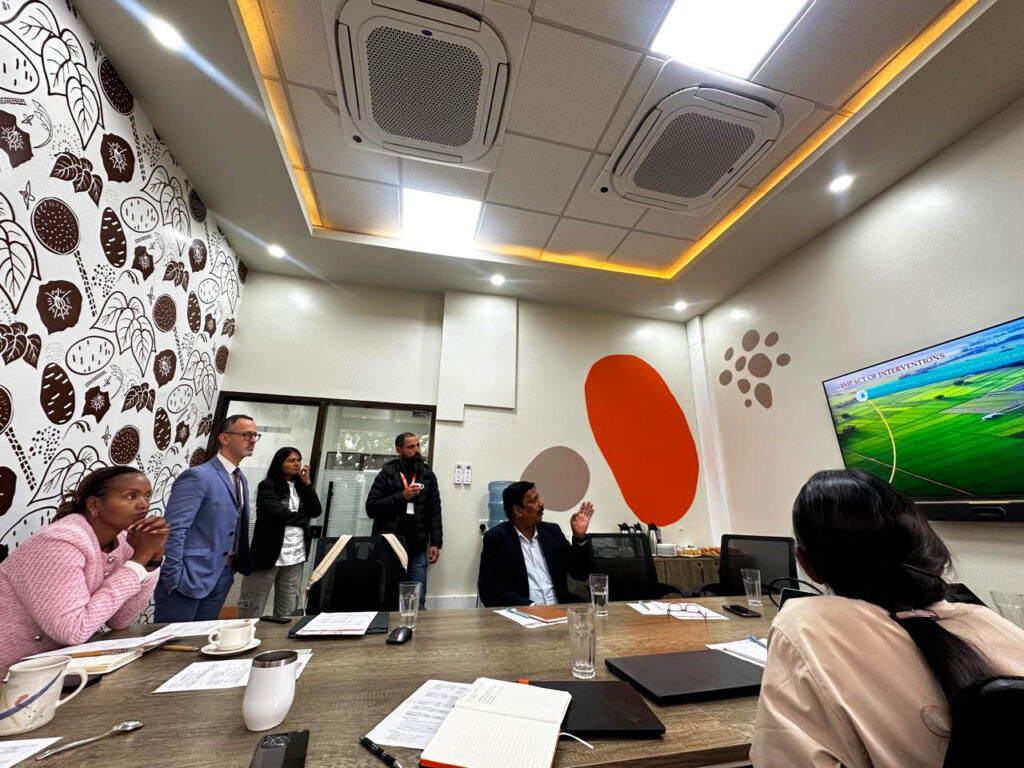
Welcome to CIP Africa Regional Office by Dr. Joyce Maru, Regional Director for Africa, and the senior leadership team, setting the tone for a week of learning, collaboration, and innovation sharing.
CIP-CGIAR East Africa Germplasm Exchange Laboratory in KEPHIS
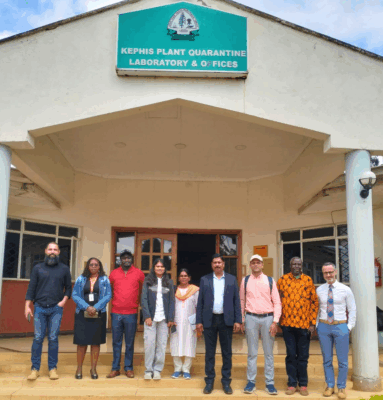
CIP-CGIAR East Africa Germplasm Exchange Laboratory in KEPHIS which facilitate access to high-quality root and tuber crops planting material for farmers in Kenya and the larger Eastern African region. The delegation learned how the facility ensures safe and efficient cross-border movement of seed and germplasm enhancing agricultural productivity within the region.
KALRO Seeds National Head Office courtesy visit
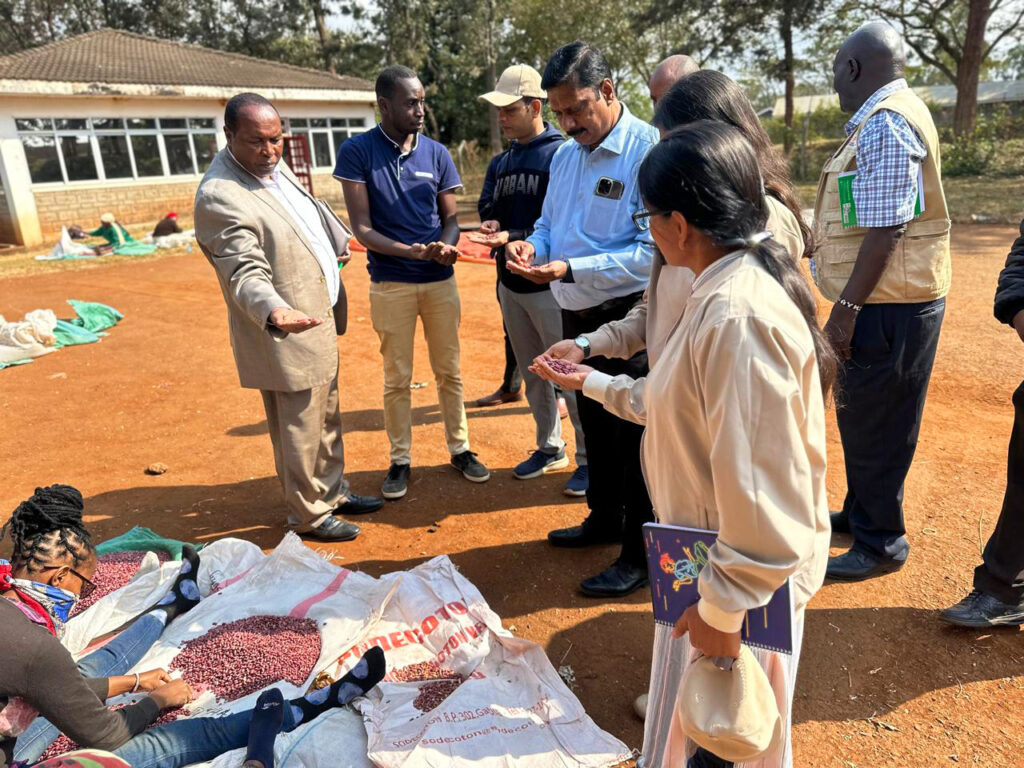
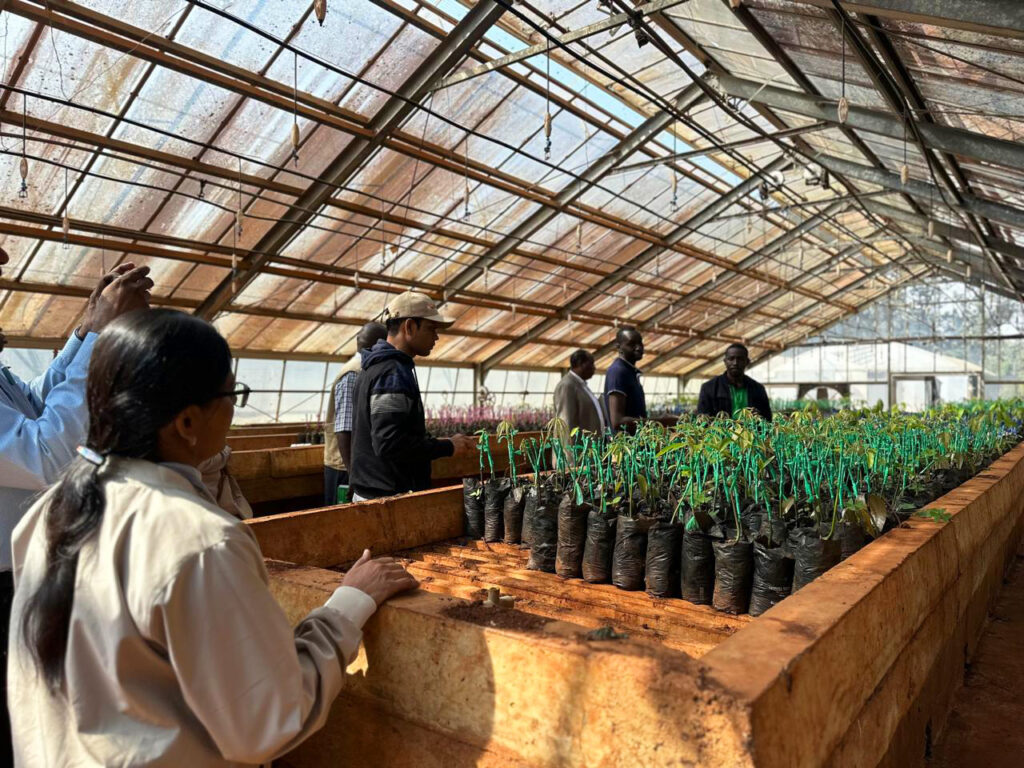
KALRO Seeds Director, Mr. Robert Musyoki, warmly engaged with the visiting delegation at the KALRO Seeds National Head Office in Thika, sharing insights on the organization’s role in driving seed innovation, quality assurance, and farmer-focused solutions across Kenya.
Showcase of Early generation sweetpotato seed production at KALRO’s screenhouses in Embu
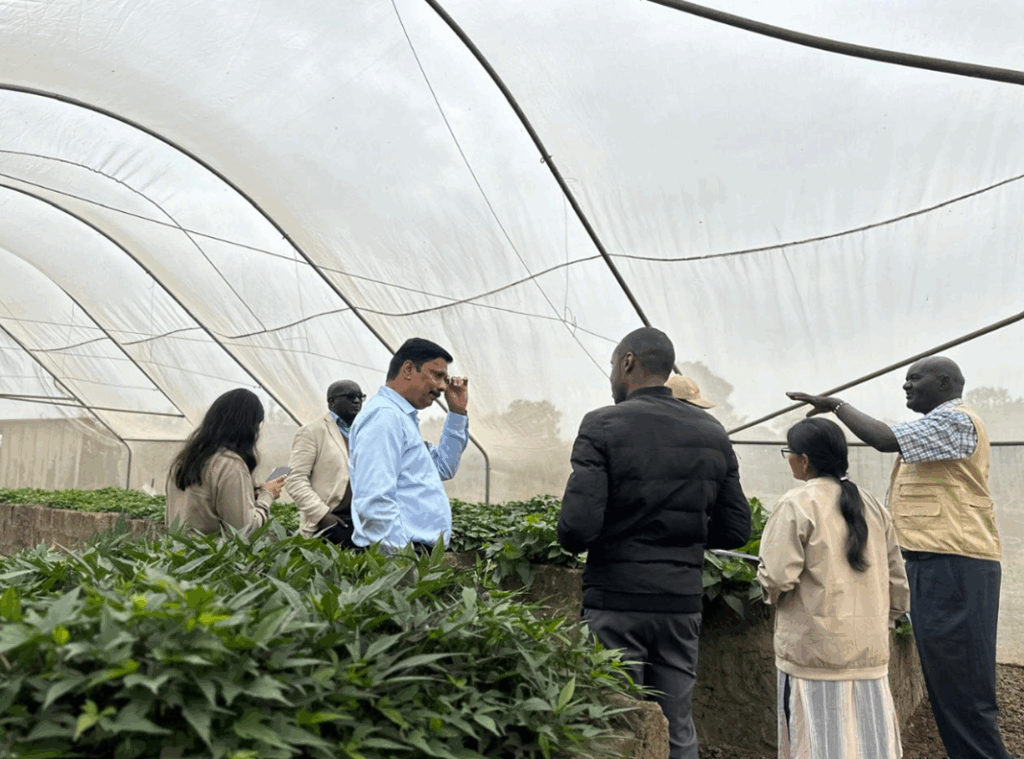

The delegation explored early generation sweetpotato seed production at KALRO’s screenhouses in Embu. This visit, part of a project focused on technology transfer and smallholder farmer capacity building, aims to enhance sweetpotato production and profitability.
Potato Zero tillage trial site in Meru County
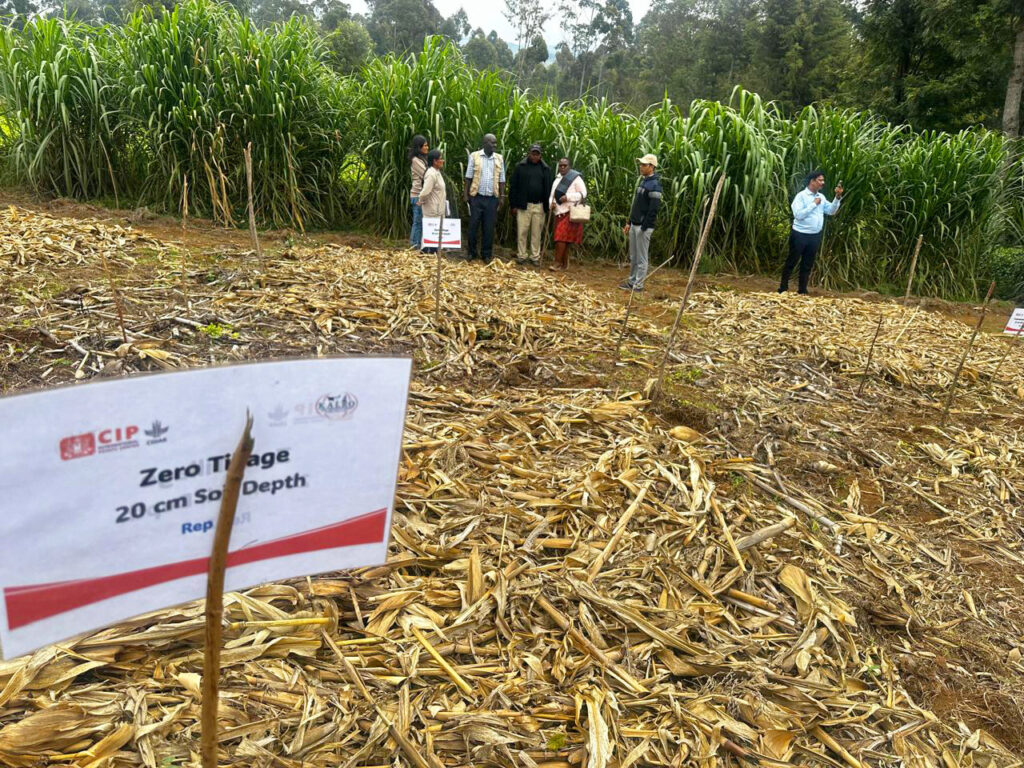
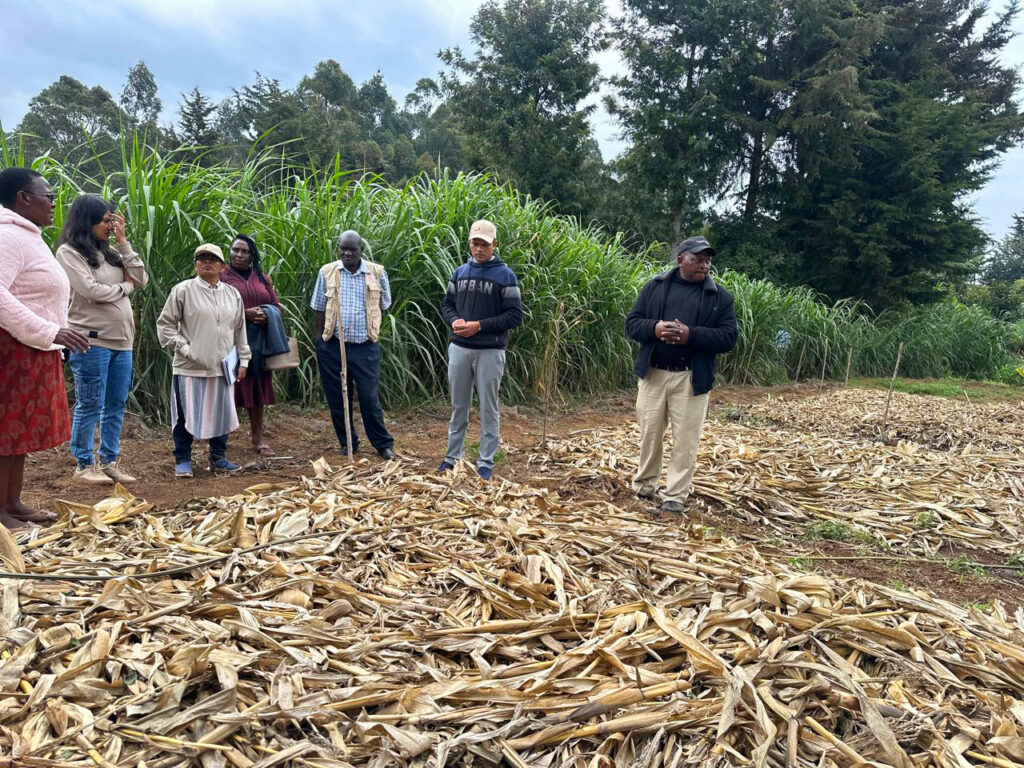
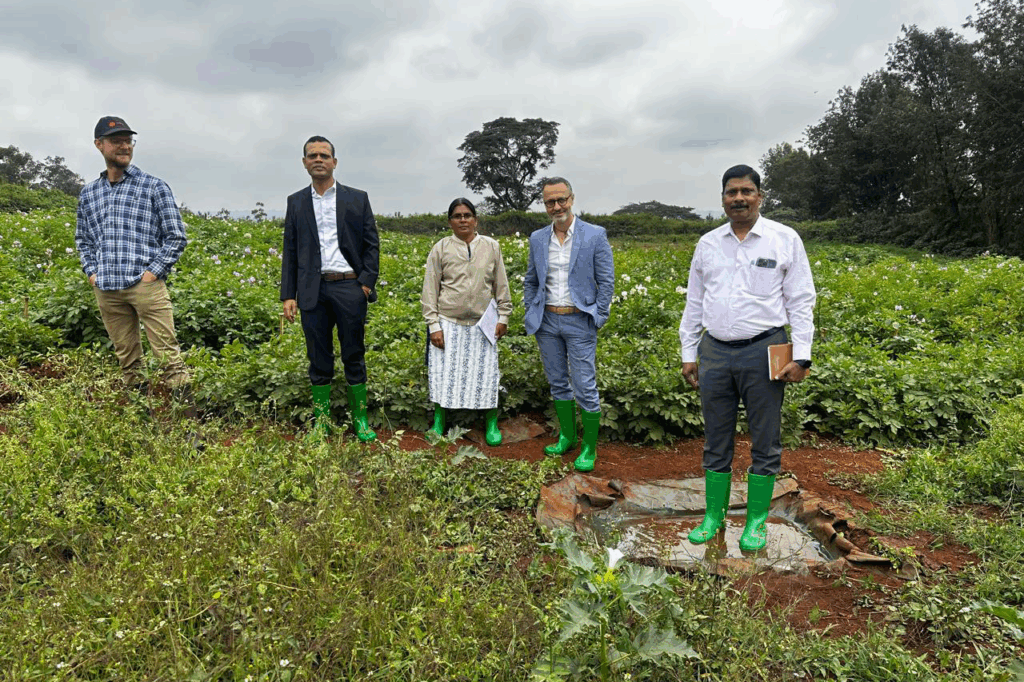
For smallholder farmers in Kenya, potatoes have long been a staple source of food and income. Zero tillage, where farmers plant crops without disturbing the soil. Instead, potatoes are placed on the ground beneath a layer of mulch, a byproduct of the maize harvest. Farmers in Meru County, Kenya now see that the mulch retains moisture, suppresses weeds and stabilizes soil temperatures, making it easier to grow potatoes even in less predictable climates.
A visit to B&B Processing Company
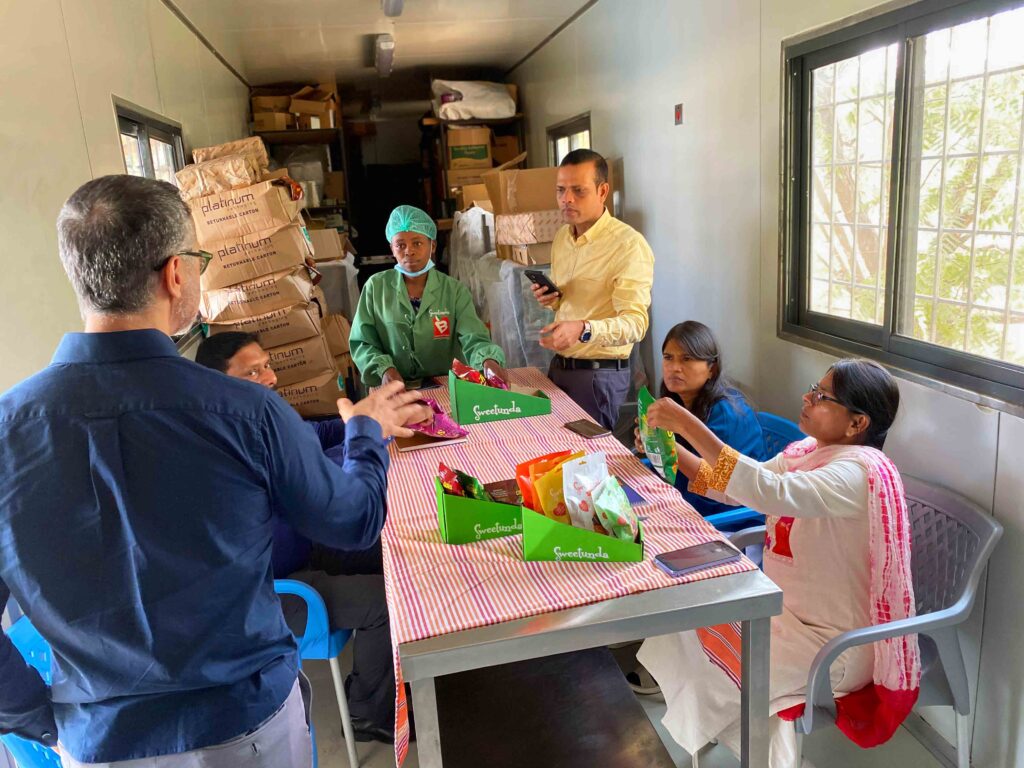
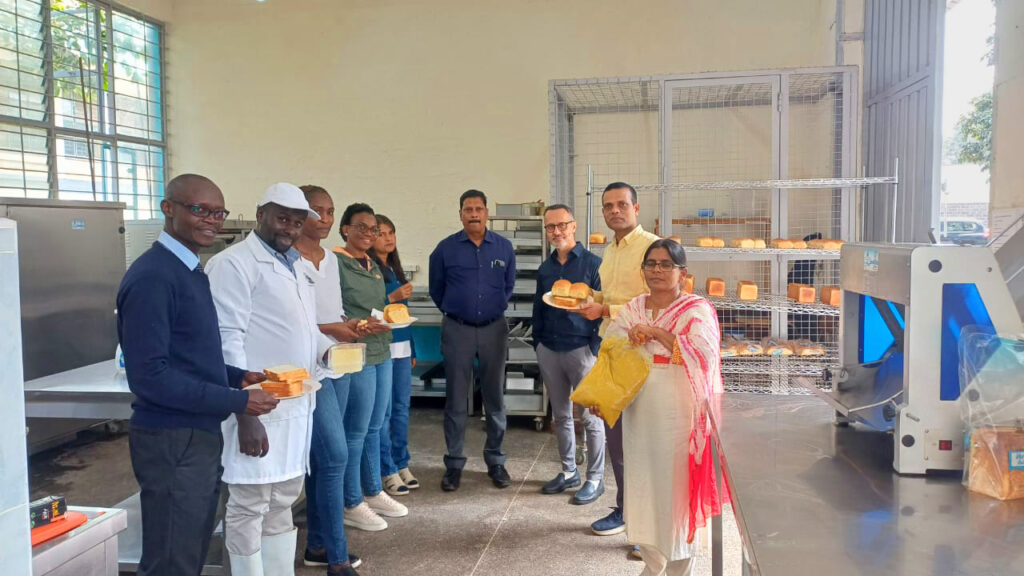
A visit to B&B Processing Company highlighted how Orange Fleshed Sweetpotato (OFSP) is processed into various nutritious food products, benefiting both health and rural economies. The processing, which includes technologies like aseptic-packing for longer shelf life, enables the creation of products such as OFSP puree, which can be incorporated into baked goods, baby food, and other food items. This not only increases access to nutritious food but also supports local farmers and businesses.
Demonstrations on CIP and HZPC on hybrid potato, advances in digital breeding, AI collaboration with QED
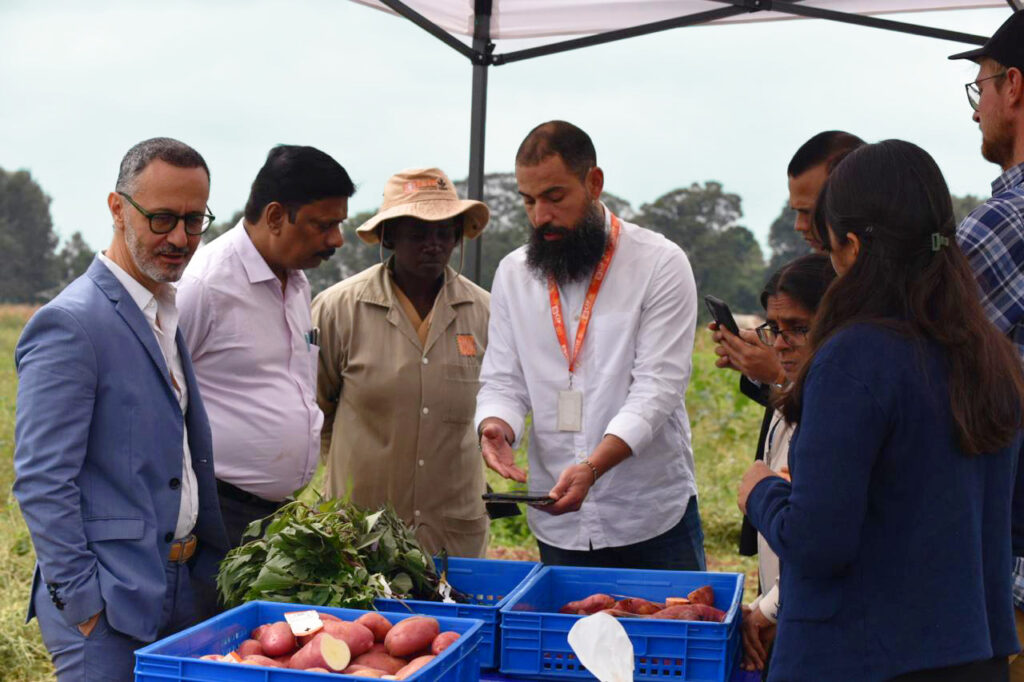
The team visited the University of Nairobi’s Department of Food Science, Nutrition and Technology, opening discussions on collaborative research in nutrition-sensitive agriculture. At the University of Nairobi, live demonstrations were observed in Hybrid potato breeding with HZPC , Advances in digital breeding, AI-driven innovations with QED , and Solar-powered cold storage technology.
Solar-powered cold storage technology installed at the University of Nairobi
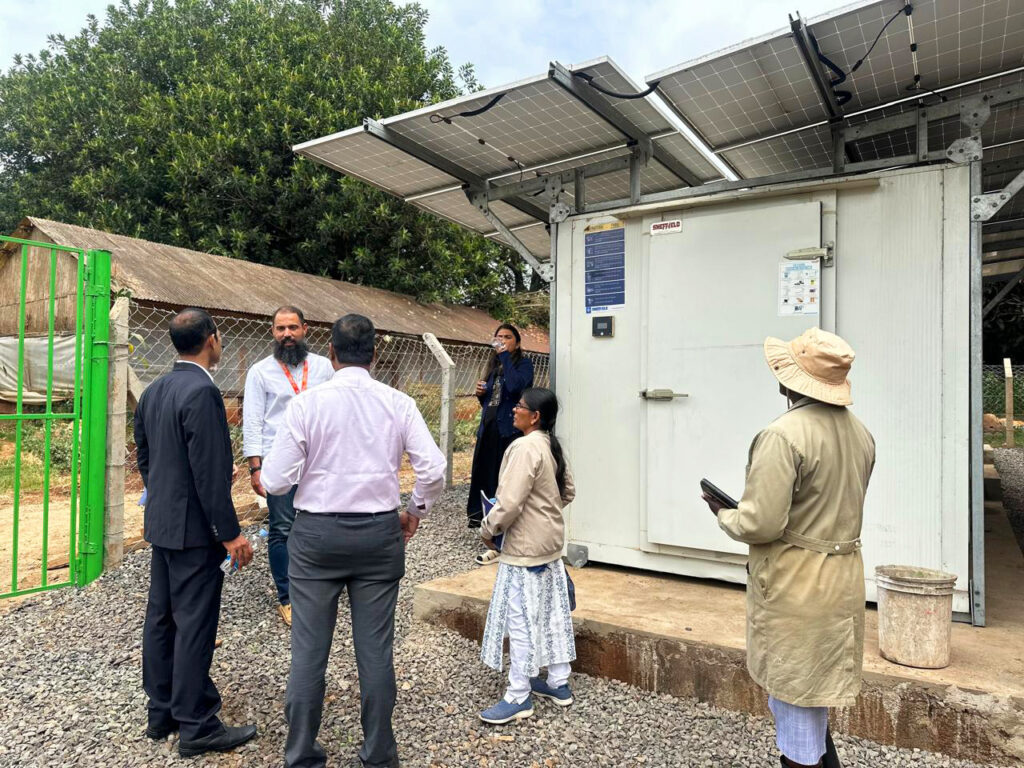
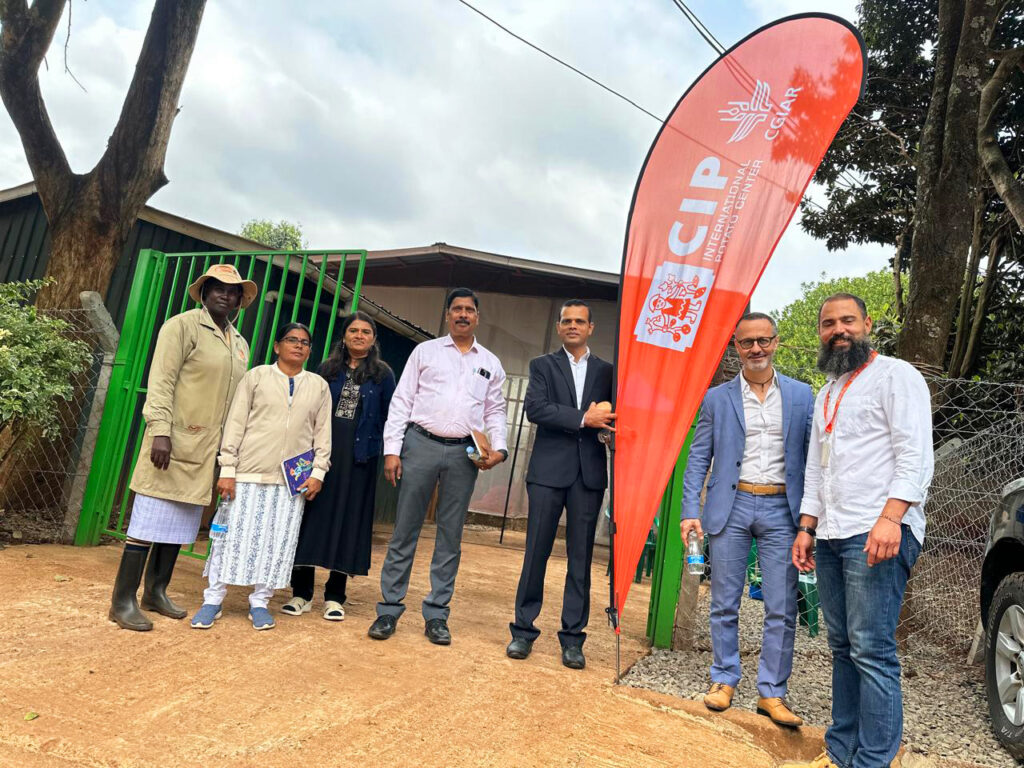
Solar-powered cold storage technology installed at the University of Nairobi is key to addressing post-harvest losses in the horticultural sector. This technology is beneficial for smallholder farmers in off-grid areas, aiming to reduce spoilage of perishable goods and improve market access.
Discussion on future collaboration
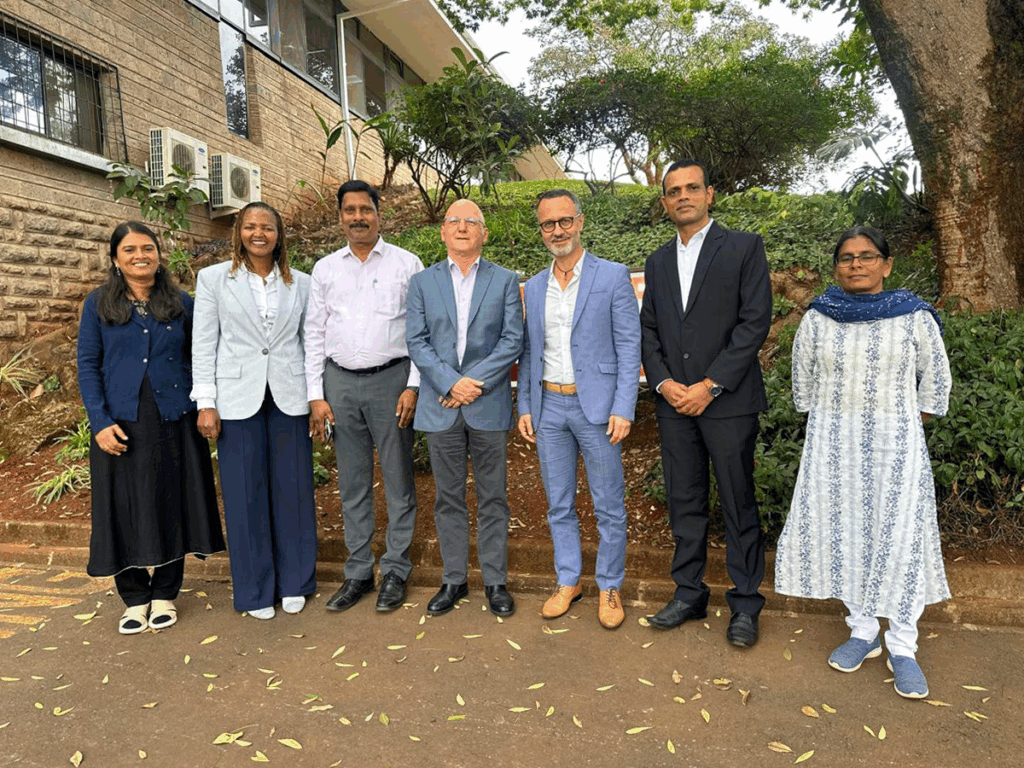
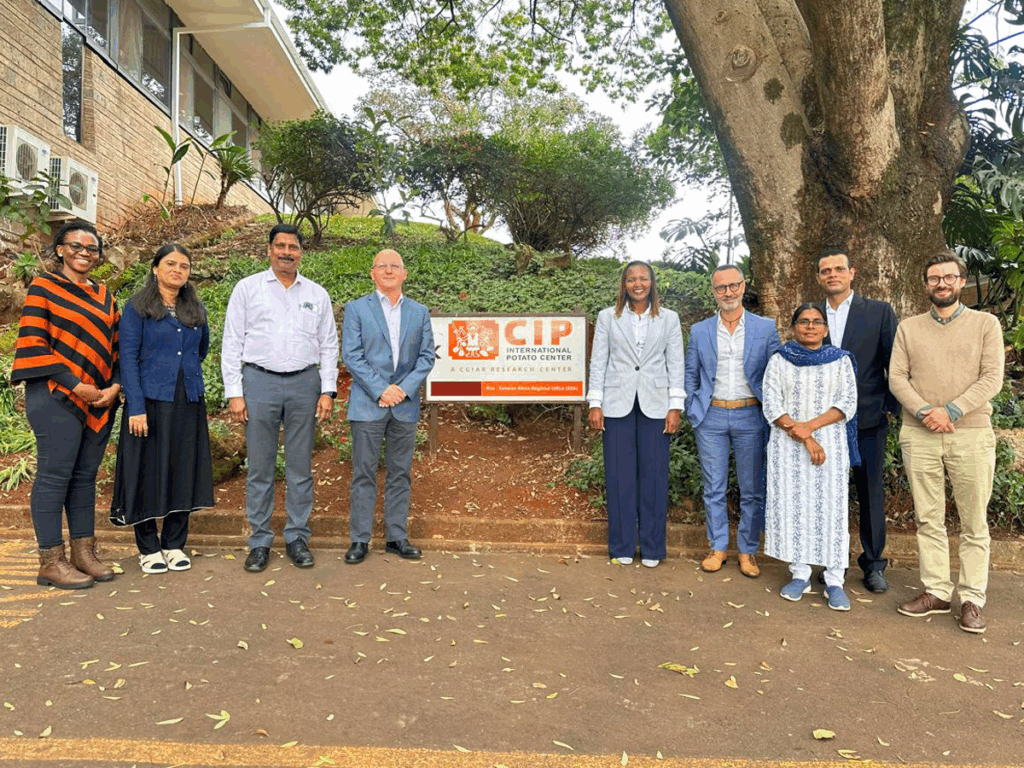
A high-level reflection meeting with the CIP Director General, Dr. Simon Heck, explored future collaboration pathways, focusing on climate-smart, nutrition-sensitive agricultural solutions.