When the rains come to Madagascar, sweetpotato fields turn green and abundant. For farmers in the Great South, this crop provides food for their families and a chance to earn income at local markets.
But abundance can quickly become a burden. Sweetpotato roots spoil quickly once pulled from the soil. Without access to appropriate storage facilities, farmers harvest only what they can eat or sell daily, a practice called piecemeal harvesting. The rest of the crop stays in the ground, vulnerable to pests and diseases, or sudden floods. A significant portion of the harvest is lost due to this.
From roots to resilience
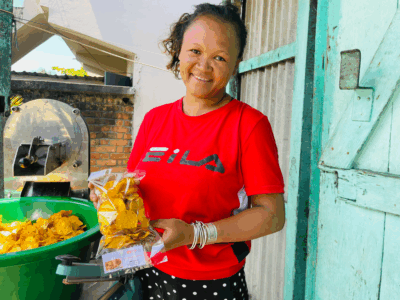
That’s where the International Potato Center (CIP) and its like Mionjo, FIFAMANOR, World Bank, Malakass, among others, can assist. Together, they are supporting farmers and other OFSP value chain actors to transform fragile roots into durable, nutritious, and convenient products. By processing orange-fleshed sweetpotato (OFSP) into chips, crisps, and puree that can be integrated in bakery products, farmers and businesses can store the harvest longer, find markets for their surpluses and add value to what was once lost.
Building new opportunities
Through technical training, CIP supports 50 small- and medium-sized enterprises in Southern Madagascar, many of which are led by women and youth. They learn how to operate and maintain processing equipment, to develop recipes, and to apply good manufacturing and hygienic practices. CIP also provides business support, including market studies, consumer testing, business plan development and promotional activities at local fairs.
Nutrition baked in
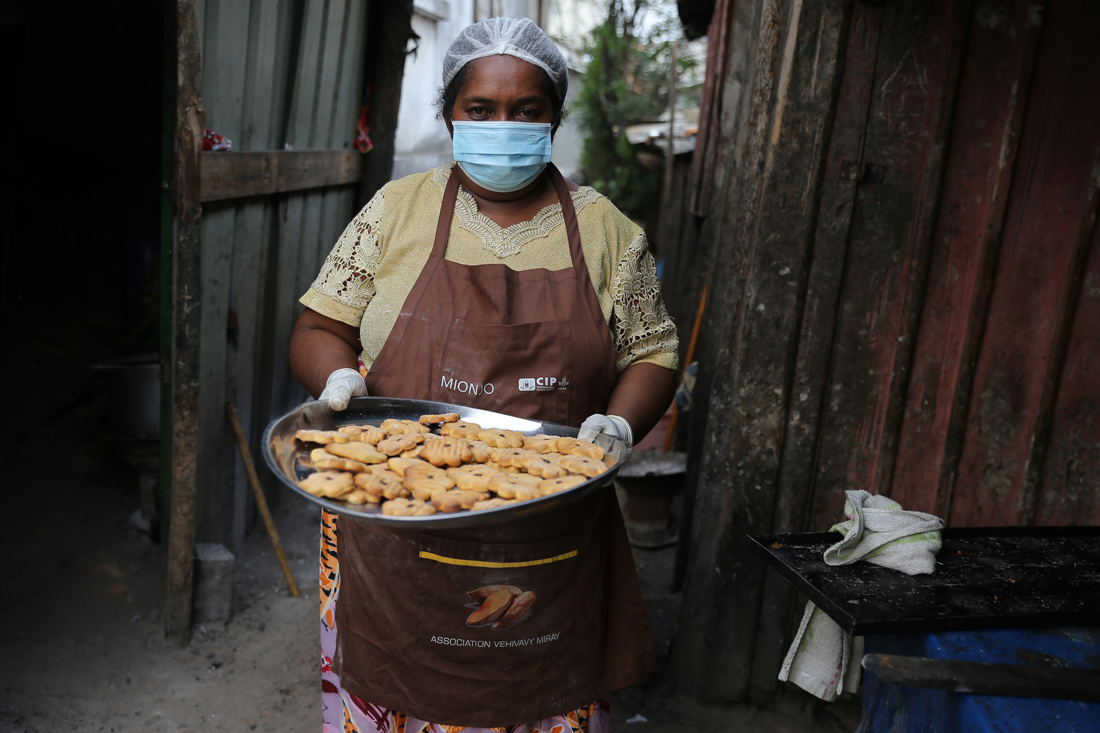
The impact goes beyond reducing loss and waste. In Madagascar, bakery and pastry products are sold everywhere. Studies show that products made with 30–35% OFSP is just as appreciated by consumers as traditional wheat products, but they cost up to 25% less to produce. Families gain access to affordable products rich in vitamin A, while bakers increase their profit margins.
A story bigger than Madagascar
For farmers, processing means no longer worrying about losing their harvest due to pest damage worsened by drought and to a slow market.. For communities, it means improved diets, more jobs, and more resilient livelihoods.
And for the world, Madagascar offers an inspiring lesson that with innovation and collaboration, food loss and waste can be transformed into food and nutrition security.
On this International Day of Awareness on Food Loss and Waste Reduction, we celebrate the farmers, entrepreneurs, and communities leading this change—proving that no sweetpotato root should go to waste.