
Ask anyone in Lima about the weather over the past few months and they are likely to say: “This year, we haven’t really had winter.”
At the Campo de Marte meteorological station in Lima, winter maximum temperatures typically hover around 19°C. According to Peru’s National Meteorology Service (SENAMHI), this winter they reached 28°C. In some parts of Lima, temperatures recorded anomalies of up to +10.1°C above normal.
These unusually high temperatures result from an extreme El Niño event this year, intensified by climate change, which disrupts normal temperature and rainfall patterns worldwide. For potato, unusually warm temperatures hinder growth and increase the likelihood of pests and diseases. It needs cool conditions to develop properly.
Yet in Peru, potato is a pillar of the national diet. As such, a major decline in potato production is catastrophic for those who grow the crop and poses a threat to the food security of the entire nation.
In the fight against food insecurity, researchers at the International Potato Center (CIP) faced a triple challenge:
- Develop more nutritious potato varieties suitable for industrial processing that are also resistant to pests and diseases.
- Adapt these varieties to atypical conditions, such as unusually high temperatures that hinder potato cultivation.
- Produce them using sustainable practices rooted in the principles of regenerative agriculture.
In late September, a delegation from Minera Poderosa and Asociación Pataz, which support projects related to combating food insecurity in Peru, together with representatives from other organizations (AGAP, Agromin, ComexPerú, Información para la Acción, IIMP, SNMPE, Supermercados Peruanos, Asociación Frieda y Manuel Delgado Parker, Danper, Capitalismo Consciente, APOYO, and Semana Económica), attended a harvest demonstration showcasing a number of solutions.
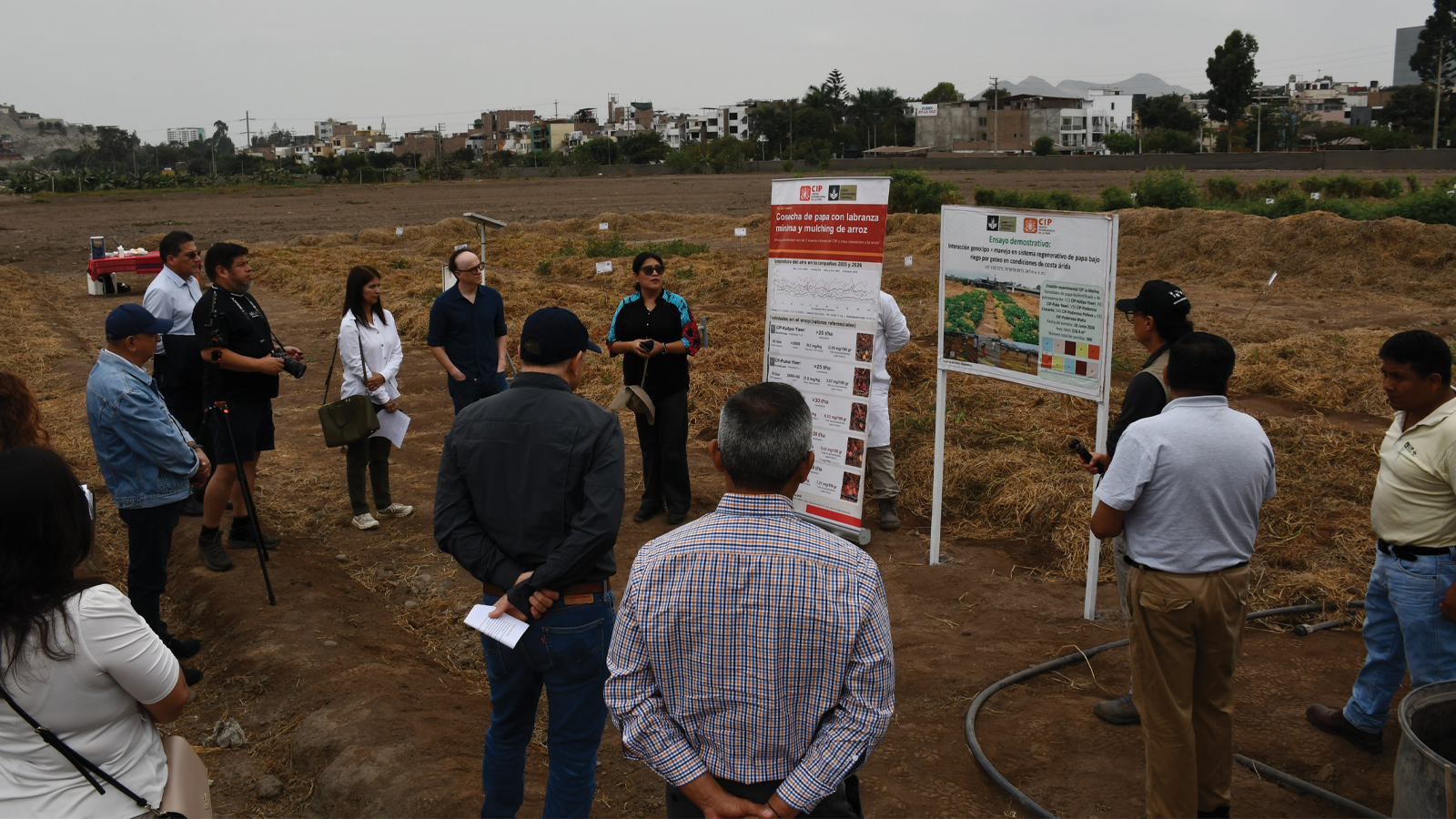
Developing More Nutritious Potato Varieties That Resist Pests and Diseases
In Peru, food insecurity and iron-deficiency anemia remain critical public health challenges, particularly among women and children in vulnerable rural and urban communities.
CIP’s new potato varieties are biofortified, meaning they contain higher levels of essential nutrients such as iron, zinc and vitamin C, the latter of which enables the body to more efficiently absorb iron and zinc.
In addition, their suitability for industrial processing, such as frying and baking, expands farmers’ market opportunities by aligning production with current market demands and consumer preferences.
At the same time, their resistance to late blight, a disease becoming increasingly threatening under adverse climatic conditions, contributes to crop resilience by increasing yield stability and reducing the need for pesticides. This helps protect the health of farmers who apply these chemicals, and consumers who consume them.
“These potatoes are among our best innovations at CIP,” said Gabriela Burgos, CIP senior scientist.
Adapting Potatoes to Unusually High Temperatures
Drawing on techniques developed by CIP’s participatory research in India, researchers used rice straw to cover the soil and the potatoes were planted directly on untilled soil. This technique, known as zero-till mulching, helps reduce soil temperature while conserving moisture, creating a favorable microclimate despite the extreme heat experienced this winter.
Planted on June 18, these potato varieties would not have been able to grow under Lima’s recent heat conditions, especially given the influence of El Niño, without this technique.
Mulching is particularly promising because it is highly replicable. It uses residues from other crops that, rather than being burned by farmers, can be repurposed as mulch.
Producing Potatoes Through Regenerative Agricultural Practices
Regenerative agriculture seeks not only to retain nutrients in the soil but also to restore and enhance soil fertility, contributing to a more sustainable, diversified, and resilient agricultural system.
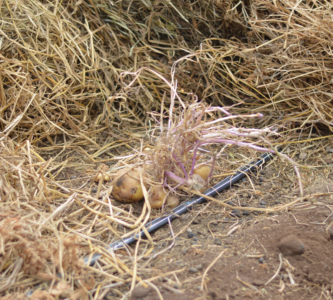 Rice-straw mulch not only lowers soil temperature, allowing potatoes to grow under warmer conditions, but also increases organic content and improves overall soil health. In addition, reduced tillage minimizes mechanical disturbance to the soil, preserves its structure, and reduces farmers’ workload.
Likewise, the drip irrigation system managed through soil-moisture demand sensors, demonstrated during the field visit, enables more efficient water use compared to conventional irrigation practices.
Together, these practices reduce farmers’ production costs by approximately 20% through more efficient resource management while remaining firmly grounded in the principles of regenerative agriculture.
Where climate change and unseasonably warm temperatures work fast, CIP scientists, with the support of their sponsors, must work faster as well, developing new varieties and new technologies to accompany farmers and feed our ever-changing world.
“We have to adapt to what lies ahead,” said Jimena Sologuren, Minera Poderosa.